Op deze pagina worden publicaties gedeeld van onze teamleden.
- ‘The Roman Military Community as a Melting Pot: Biomolecular Evidence from the Lower Rhine Limes’ door Maura De Coster, Fabricio Furni, Wouter K. Vos, Jeroen Oosterbaan, Gareth R. Davies en Lisette M. KootkerMilitary communities in the Roman borderlands are increasingly understood as socially mixed and dynamic rather than homogeneous military enclaves. This study adds a biomolecular perspective through combined strontium, oxygen and carbon isotope analysis, and ancient DNA of 33 inhumed and 44 cremated individuals buried at Praetorium Agrippinae in modern-day Valkenburg (South Holland, the Netherlands).
- ‘Late Iron Age and Early Roman Brooches From the Lower Rhine Area: Provenance of the Metal Supply Traced Through Lead Isotopes’ door Arjan Ruiter, Bertil van Os, Vick Hermsen, Gareth R. Davies en Steven MerkelGeochemical analysis of five brooch types from the Lower Rhine area dated to the last century bc and first century ad is used to constrain resource use, exchange and mobility.
- ‘Stable carbon and nitrogen isotope dataset from Roman sites in Germania inferior (Xanten, Tongeren, and Valkenburg)’ door Anna Żmudzka, Maura De Coster, Wouter Vos, Henk van der Velde, Bernd Liesen, Jason E. Laffoon en Lisette M. Kootker
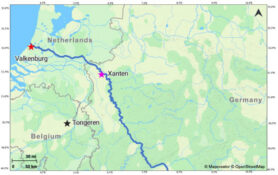 This dataset includes stable carbon (δ¹³C) and nitrogen (δ¹⁵N) isotope measurements from bone and dentine collagen of 38 human and 10 faunal samples dated to the 1st to 4th centuries CE.
 - ‘Global tastes, local choices: Strontium isotope and concentration evidence for changing dietary input in Roman Nijmegen, the Netherlands’ door Maura De Coster, Joep Hendriks, Hannah F. James, Christophe Snoeck, Gareth R. Davies en Lisette M. KootkerThis study investigates dietary practices and local interaction in Roman and pre-Roman Nijmegen, the Netherlands, through strontium isotope ratios (⁸⁷Sr/⁸⁶Sr) and concentration measurements on cremated human remains from rural, urban, and military contexts, which primarily reflect the geological provenance of dietary strontium.
- ‘Not Solely a Military Frontier, and Not Only a Line: the Lower Germanic Limes as Imperial Borderlands’ door Saskia Stevens, Gertjan Plets, Wouter Vos en Henk van Houtum
 Dit artikel onderzoekt hoe de Romeinse Limes vooral wordt gezien als een militaire grens. Aan de hand van de Nedergermaanse Limes in Nederland, en vergelijkingen met Duitsland en Groot-Brittannië, wordt onderzocht hoe onderzoekstradities, politieke agenda’s en de fysieke kenmerken van vindplaatsen deze eenzijdige beeldvorming hebben beïnvloed.